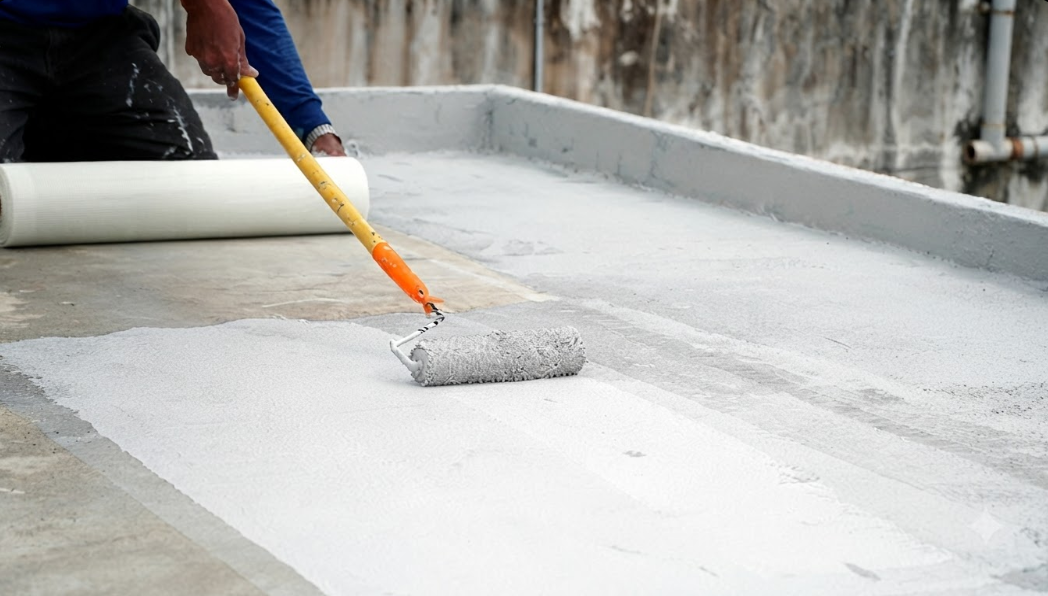
India’s specialised waterproofing industry has reached an estimated market size of ₹15,000 crore and is moving toward the $2 billion mark, highlighting the growing importance of waterproofing in the country’s construction and infrastructure ecosystem.
The development was highlighted at the second edition of the India International Waterproofers Conference & Expo 2026, organised by the Waterproofers Association of India (WAI).
The two-day event brought together more than 20 industry speakers, 55 international delegates and participants from countries including China, Korea, Germany and the UAE. The exhibition also featured 53 specialised booths with live demonstrations of waterproofing technologies and application systems.
Speaking at the inauguration, Durga Shanker Mishra, former Secretary of the Ministry of Housing & Urban Affairs and former Chief Secretary of Uttar Pradesh, said India's construction sector needs to move beyond short-term cost considerations and focus on infrastructure designed for significantly longer service lives.
He emphasised that as India works toward the Viksit Bharat 2047 vision, construction technologies and material systems must evolve to support infrastructure capable of lasting for decades rather than being designed primarily around an initial 10-to-20-year horizon.
Waterproofing moves from finishing item to structural priority
Waterproofing has traditionally received less attention during project planning compared with structural work, interiors and architectural finishes. Industry leaders at the conference argued that this approach is increasingly becoming difficult to sustain as buildings become taller, basements deeper and infrastructure more exposed to demanding environmental conditions.
Sandeep Chaudhry, President of WAI and Founder of SNP Technologies and DryShield Waterproofing, described waterproofing as a critical protective layer for buildings and infrastructure.
He pointed to the industry's need for greater technical standardisation, skilled applicators and stronger specifications to reduce failures caused by poor execution and inadequate planning.
The broader shift is significant for India's construction industry. Waterproofing failures can affect basements, foundations, terraces, tunnels, water-retaining structures and other critical elements, potentially resulting in repair costs that far exceed the initial savings achieved through cheaper systems.
Global collaboration enters the conversation
China's significantly larger waterproofing industry also emerged as a potential source of technology and execution expertise.
Hu Xibao, Chairman of the China Building Waterproof Association, highlighted China's approximately $16 billion waterproofing sector and called for greater cooperation between Indian and Chinese companies.
According to him, India's rapid urbanisation presents opportunities for technologies such as automated application equipment and specialised execution systems, particularly for projects operating in India's high-temperature environments.
The participation of international delegates indicates that India's growing construction pipeline could increasingly attract global waterproofing technology providers and material manufacturers.
Climate change is forcing waterproofing standards to evolve
One of the strongest themes at the conference was the growing impact of extreme weather on building envelopes.
Mehul Parikh, Advisor to Pidilite Industries and Principal Consultant at EnvaDure, argued that many buildings are still being designed using waterproofing approaches that do not adequately account for changing climatic conditions.
His presentation highlighted rising heat and concentrated rainfall as emerging challenges for roofs and other exposed building components.
Among the solutions discussed were enhanced thermal insulation systems, spray polyurethane foam applications above decks and vegetative green roofs designed for India's increasingly severe heat conditions.
Parikh also questioned the continued reliance on basic water-ponding tests as the primary method of evaluating waterproofing performance, calling for more scientific testing methods and clearer accountability across manufacturers, contractors and asset owners.
Technical focus expands beyond buildings
The conference also addressed waterproofing challenges in infrastructure where failure can have significant operational and financial consequences.
Technical sessions covered basement waterproofing, sub-grade structures, bottom-up and top-down confined wall systems, chemical containment structures, sewage treatment plants and desalination facilities.
Discussions conducted in collaboration with NAREDCO also examined design, tendering and supervision practices that can contribute to waterproofing failures.
For India's rapidly expanding urban infrastructure, these issues are becoming increasingly important. Underground transit systems, deep basements, water infrastructure and large-scale utility projects operate under significantly different exposure conditions compared with conventional buildings.
The bigger shift
The growth of India's waterproofing market reflects a broader change taking place across construction.
As developers and infrastructure agencies face higher lifecycle expectations, extreme weather risks and rising costs of structural repairs, waterproofing is gradually moving from being treated as a relatively minor construction activity to becoming an important component of asset durability and lifecycle performance.
The industry's next challenge will be converting this growing awareness into better specifications, skilled execution, testing standards and project-level quality control.
For a country building rapidly at urban and infrastructure scale, preventing water ingress may ultimately prove far cheaper than repairing the structures it damages.
- Buildonomics Staff